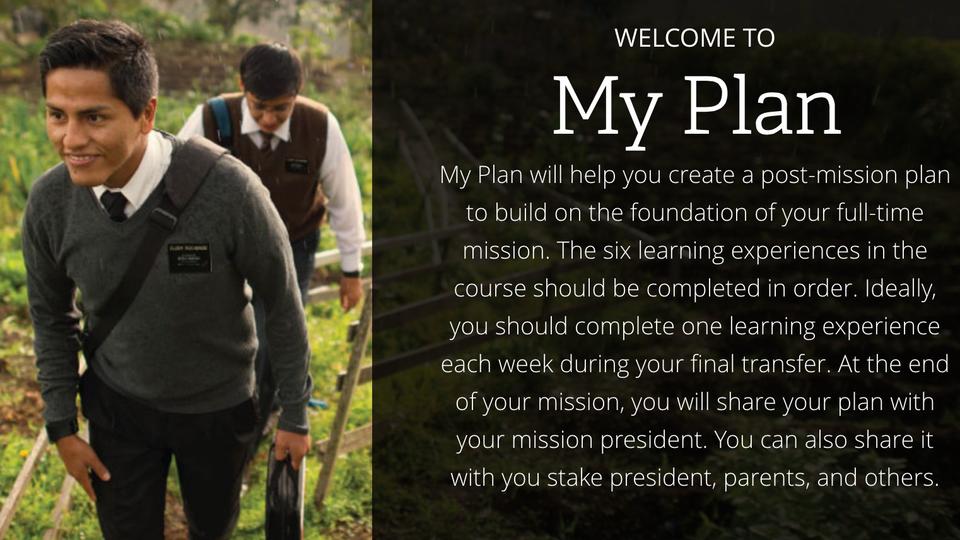
Returning missionaries of The Church of Jesus Christ of Latter-day Saints have a new resource to help them plan for the future. Beginning August 2015, the new My Plan online course will be available to help missionaries develop post-mission goals, including education, employment, dating and temple marriage. That transition can sometimes be challenging for the young men and women who have been away from home for 18 months for the young women and two years for the young men.

| Temple Square is always beautiful in the springtime. Gardeners work to prepare the ground for General Conference. © 2012 Intellectual Reserve, Inc. All rights reserved. | 1 / 2 |
Thousands of missionaries answered the call to serve after the age was lowered to 18 for the men and 19 for the women. Now, many of those elders and sisters are coming home.
“Faithful full-time missionary service helps prepare young men and women for a lifetime of discipleship and service to the Savior, their families and community,” said Elder Mervyn B. Arnold of the Seventy. “The new resource is designed to aid returned missionaries in planning their lives with purpose by setting goals that foster self-reliance, leadership and education.”
“I admonish you to plan your life with purpose,” said Church President Thomas S. Monson in one of the training videos.
Before beginning their missions and throughout their service, missionaries will use this resource to plan and set goals for how they will continue to live the gospel after their missions and throughout their lives. The program includes eight learning experiences that are designed to be completed before, during and after missionary service.
The learning experiences are divided into the following sections: My Mission, Continuing Discipleship, My Future, Self-Reliance, Remember and Become, Dating and Temple Marriage, My Vision and Goals and My Plan.
“This new gospel-driven resource will help give returning missionaries temporal and spiritual direction as they build on the knowledge they gained in the mission field and contemplate their post-mission plans with their ecclesiastical leaders, parents and mentors,” added Elder Arnold.
While serving as a mission president in Provo, Utah, for the Church, John McCune always emphasized among his missionaries the importance of setting goals, but the program implemented in his mission underscored the significance of the process.
Beginning in November 2014, McCune and his some 400 missionaries piloted the new multiphase goal-setting program. The missionaries led by President Maury Hiers of the Utah Ogden Mission also participated in the study.
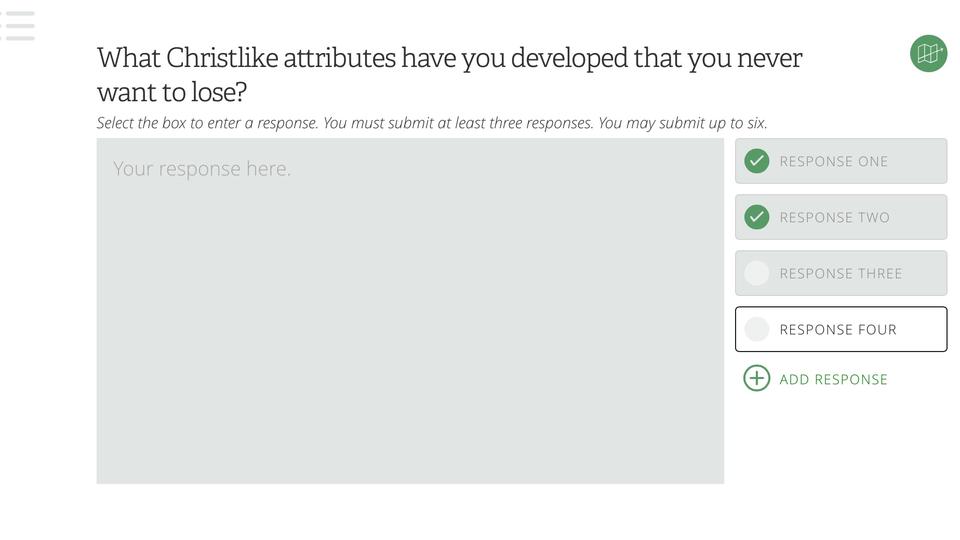
As an assignment that arrives with their mission call, missionaries participate in a group of online instructional lessons to set goals for their missions. Those goals guide their early preparation of and implementation for their daily mission activities. At the midpoint of their missions, a second assessment occurs. Then, on the last six weeks of their mission experience, young people complete a six-lesson planning analysis that covers a post-mission plan that can be shared with their mission president, their home Church leaders and their parents. Local leaders will assign a mentor to the returning missionary to also help in implementing the goals.
“We made that planning time a priority,” said McCune. “At first I was concerned that some scheduled time to work on after-mission goals could detract from the missionary work, but just the opposite occurred. When the missionaries had an allotted study time to review the materials and determine their goals, they could focus more effectively on their current assignments. And they sleep better when they aren’t worried about what to do when they return home.”
Elder Blaine Davis of Dothan, Alabama, was among the first missionaries in the Provo mission to participate in the My Plan curriculum. Though Davis and the other Provo and Ogden missionaries tested only the six-week phase of the goal-setting strategy, the recently returned missionary feels the planning activities “have truly worked miracles in the seven months since he returned home.” Not only did he implement the specific goals he set related to work and education, but he also reviews each phase of the program every couple of weeks to see “if I’m still becoming the person I want to become. It’s such a detailed plan supported by scriptures and doctrinal quotes from the general authorities that I’m able to clearly see my potential so I don’t waste a lot of time wandering or a lot of time losing the spiritual growth I acquired on my mission.”
McCune has found, as he frequently hears from his departed missionaries, that the planning activities proved of great value to the transition from full-time service. “They call me and say things like ‘I’m so grateful to have a plan,’ ‘I keep referring back to my plan and it’s helping me,’ or even ‘President, I left my plan at home when I left for school and I need it. Can you help me get a copy?’”
For Sister Kaleigh Culotta of Liberty, Mississippi, the planning results have been striking. “My younger sister and I served our missions at the same time and returned home together. I’ve felt such peace and direction by implementing My Plan; the program asked all the right questions. Anything I was worried about or stressed about was laid out clearly. My sister didn’t have that direction in place, and it took her longer to get settled. My Plan gave me a little map of what I need to do and how I’m going to accomplish it — and in the six months since I’ve been home, everything I planned for has come to pass.”
As an integral part of My Plan, local Church leaders also play a significant role. President Steven Peterson of the South Weber Utah Stake participated in the pilot study to follow up or mentor the missionaries returning to his geographic jurisdiction.
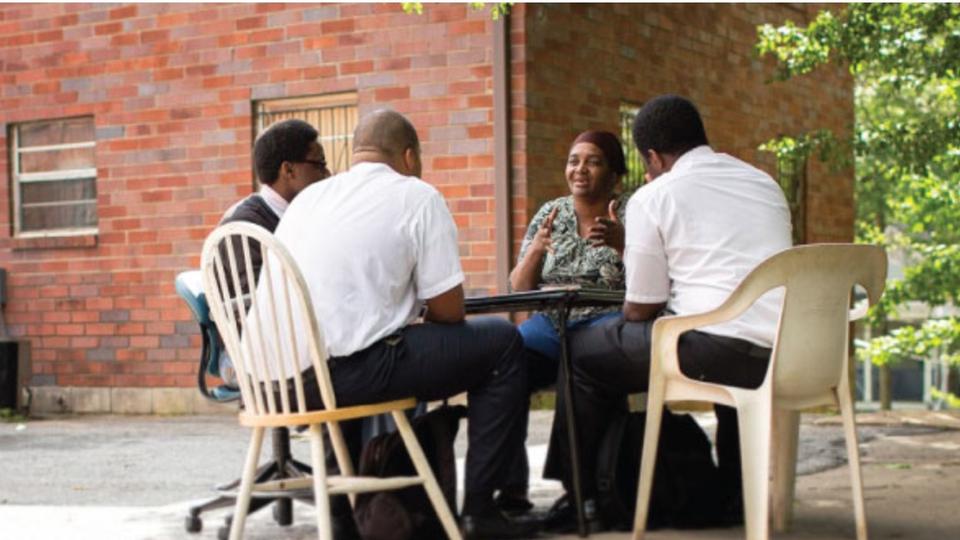
“In an ideal situation,” Peterson explained, “you have a missionary who comes home with set goals. Parents are aware of these goals and help support and mentor. You invite other ward leaders to interact with the missionary and continue discussing the plans. If you surround them with a village of people, they are more likely to succeed.”
Peterson found, in his mentoring of the recently returned missionaries in his area, that “they have learned to be obedient, honest and hard-working. If they can connect these skills to their future choices, they are bound to be successful. After all, the mission is the missionary training center for the rest of their lives; the mission is the foundation of all they will do.”
The My Plan training will be available at myplan.lds.org and on the missionary portal. A printed workbook will be available in missions where technology is limited.