
On Sunday, February 22, 2026, the 45th stake of The Church of Jesus Christ of Latter-day Saints was organized in Otavalo, Ecuador. Elder Juan Pablo Villar, President of the South America Northwest Area, presided at the meeting for the creation of the Ibarra Stake.
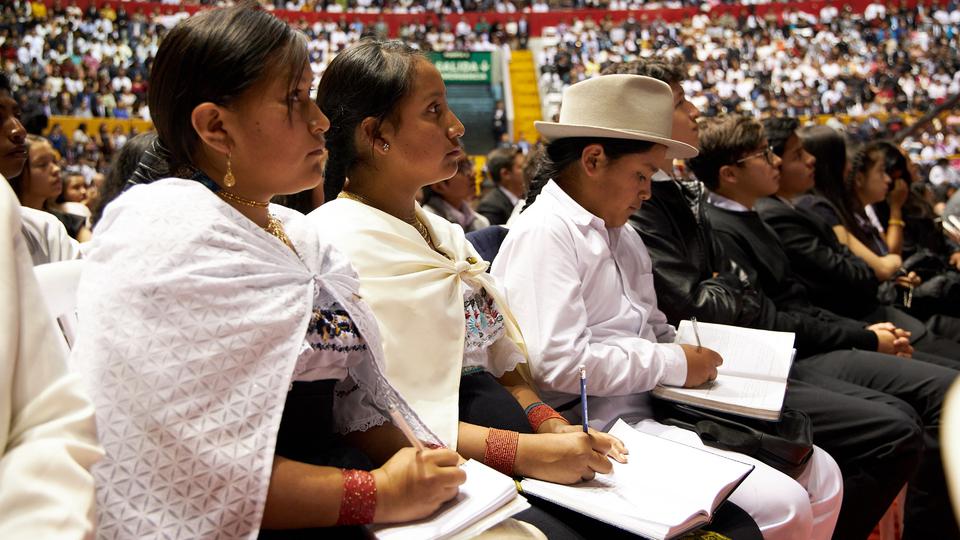
With 3,500 people in attendance, Elder Villar and Elder Sandino Román, a counselor in the Area Presidency, focused their messages on unity and the promise that growth will continue as members remain faithful to the teachings of Jesus Christ.
- Estaca-Ibarra-Otavalo-Ecuador-2
- Estaca-Ibarra-Otavalo-Ecuador-2
- Estaca-Ibarra-Otavalo-Ecuador-13
- Estaca-Ibarra-Otavalo-Ecuador-1
- Estaca-Ibarra-Otavalo-Ecuador-11
- Estaca-Ibarra-Otavalo-Ecuador-9
- Estaca-Ibarra-Otavalo-Ecuador-6
- Estaca-Ibarra-Otavalo-Ecuador-4


| Temple Square is always beautiful in the springtime. Gardeners work to prepare the ground for General Conference. © 2012 Intellectual Reserve, Inc. All rights reserved. | 1 / 2 |
At the close of the meeting, several members shared their feelings about the experience.
“The conference was excellent. I am very grateful for the blessing of having leaders, men called of God, to guide us, teach us and invite us to persevere,” said Martha de la Torre, a member of the new Ibarra Stake.
“We see how the Lord blesses our province and us as members,” added Elvia Acamuendo from the Ibay Stake. “We feel the Spirit with us today and can see how the Church grows, how Zion grows. It is a joy for us. We sustained new leaders today as well, and we want to support them all.”
Edison Pineda from the Imbaya Stake expressed support for the new leaders, noting that “not all of them are Indigenous.
“It is important to recognize that the Church does not belong to just one group of people; it is diverse,” he said. “The Lord has taught us that the gospel is for everyone. We sustain our leaders. The way to work is by serving others, and today has been evidence that God lives,” said
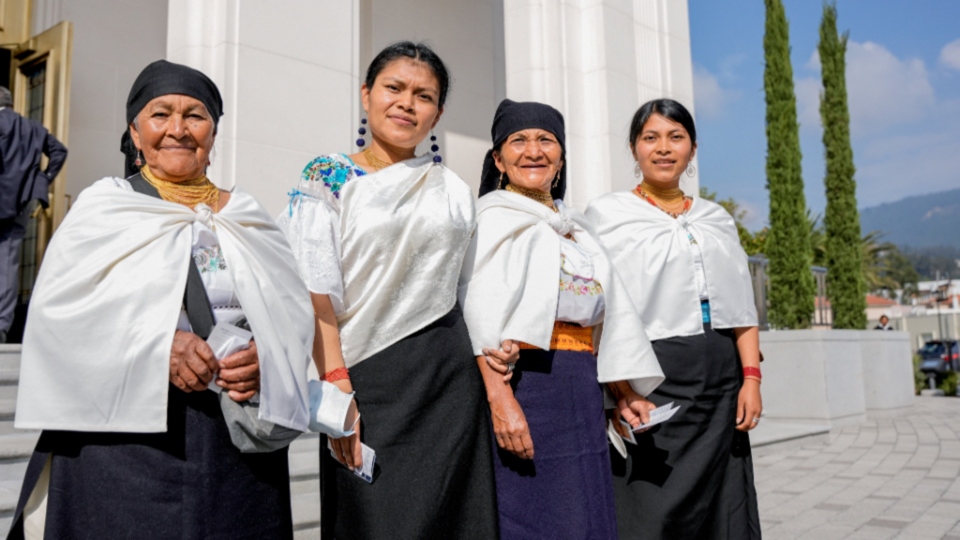
For years, Otavalo — widely known for its cultural richness and indigenous markets — has also experienced sustained spiritual growth.
In the heart of the Ecuadorian Andes, members have integrated their faith in the Savior Jesus Christ as an essential part of their identity. Christ-centered values with an emphasis on family, unity and service have resonated deeply in a community that has historically valued cooperation and mutual support.
The presence of the Church of Jesus Christ has increased since the mid‑20th century. The formal history of the Church in Ecuador began in 1965 when the first missionaries started preaching the restored gospel.
- 20221120_Quito_03
- Primeros-misioneros-de-Ecuador
- Elder-Holland-206-Quito
- nelson ecuador
- nelson ecuador
- nelson ecuador
- Andersen-South-America-1
- 20221120_Quito_02


| Temple Square is always beautiful in the springtime. Gardeners work to prepare the ground for General Conference. © 2012 Intellectual Reserve, Inc. All rights reserved. | 1 / 2 |
Members recall that when Elder Spencer W. Kimball, then a member of the Quorum of the Twelve Apostles, traveled to Ecuador and visited Otavalo, he spoke about the people who lived there and said the time had come for them to hear the messages of the gospel.
Official preaching began in Otavalo on March 1, 1966, when the city had about 22,000 residents. Since then, the work has grown steadily in the region.
The Otavalo Stake was created in 1981, followed by the Imbabura Stake, and in October 2016 the Imbaya Stake was organized — just months after Elder Jeffrey R. Holland of the Quorum of the Twelve Apostles visited the city.
On that occasion years earlier, Elder Holland expressed joy for growth “reflected not only in the number of members but also in the maturity of leaders and the strength of the youth.”
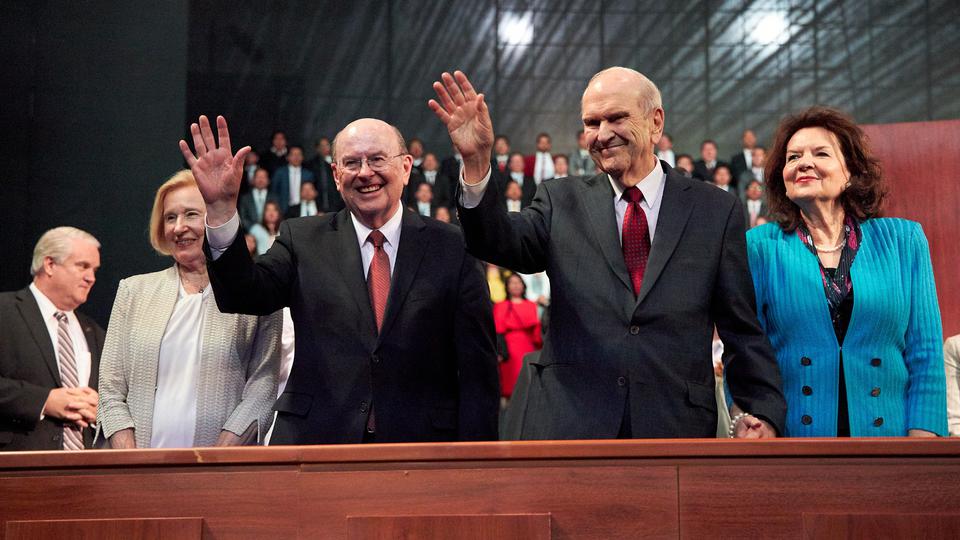
Later, Elder Quentin L. Cook of the Quorum of the Twelve Apostles dedicated the Quito Ecuador Temple following an open house in which 50,000 people toured the house of the Lord.
In 2022, Elder Neil L. Andersen visited Ecuador and declared that the stakes, leaders and members were evidence of “the power of the work of the people over the last five decades.” Speaking specifically about growth, he said, “You can count the seeds in an apple, but you cannot count the apples in a seed.”